
Resin Bound
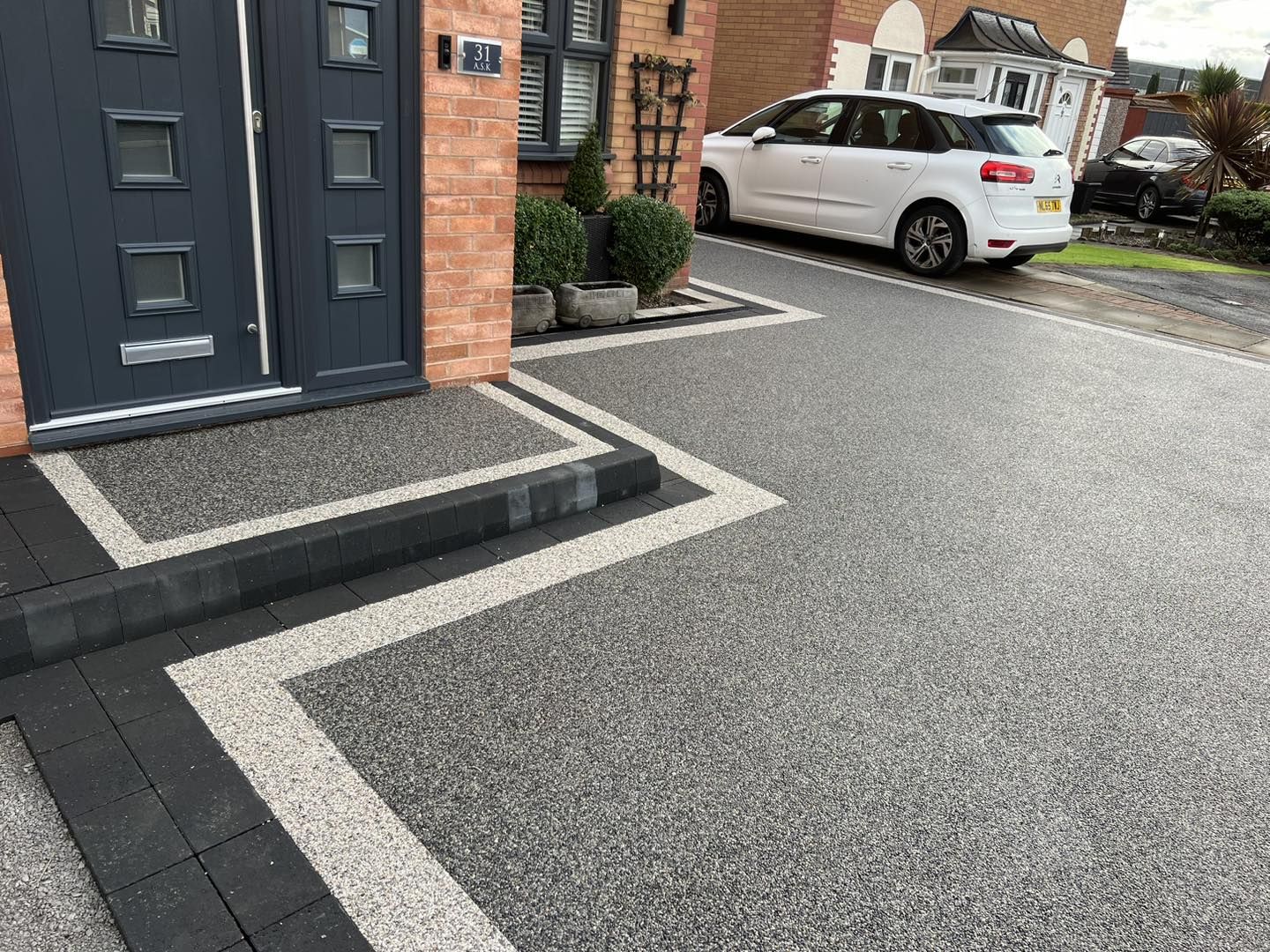
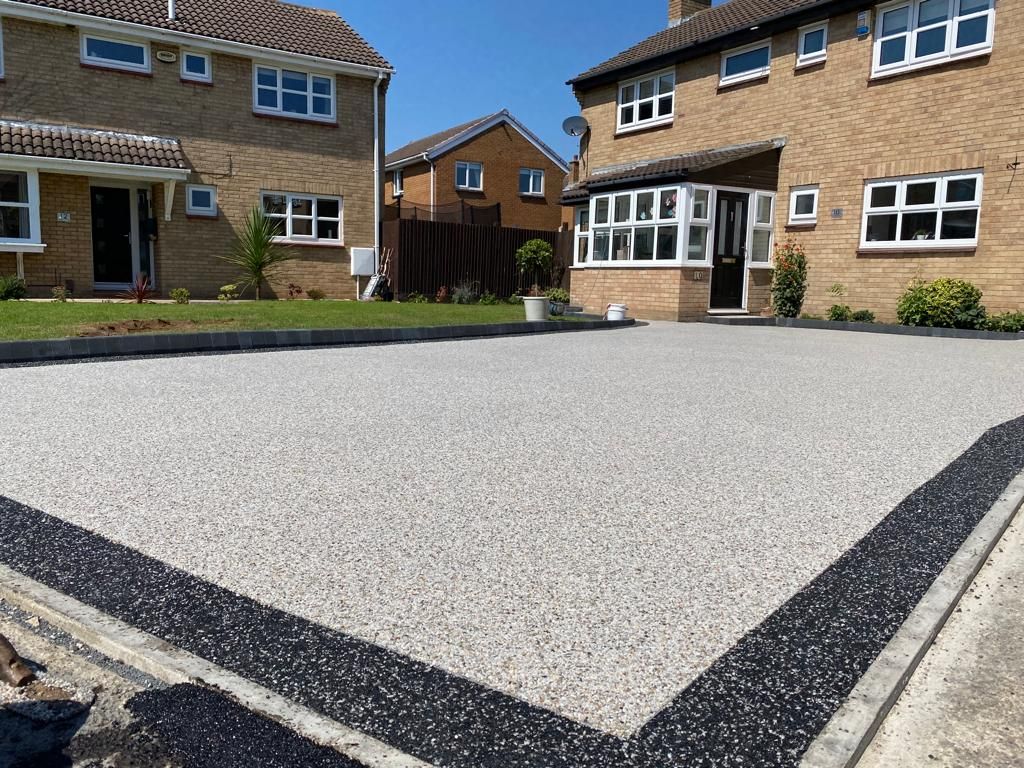
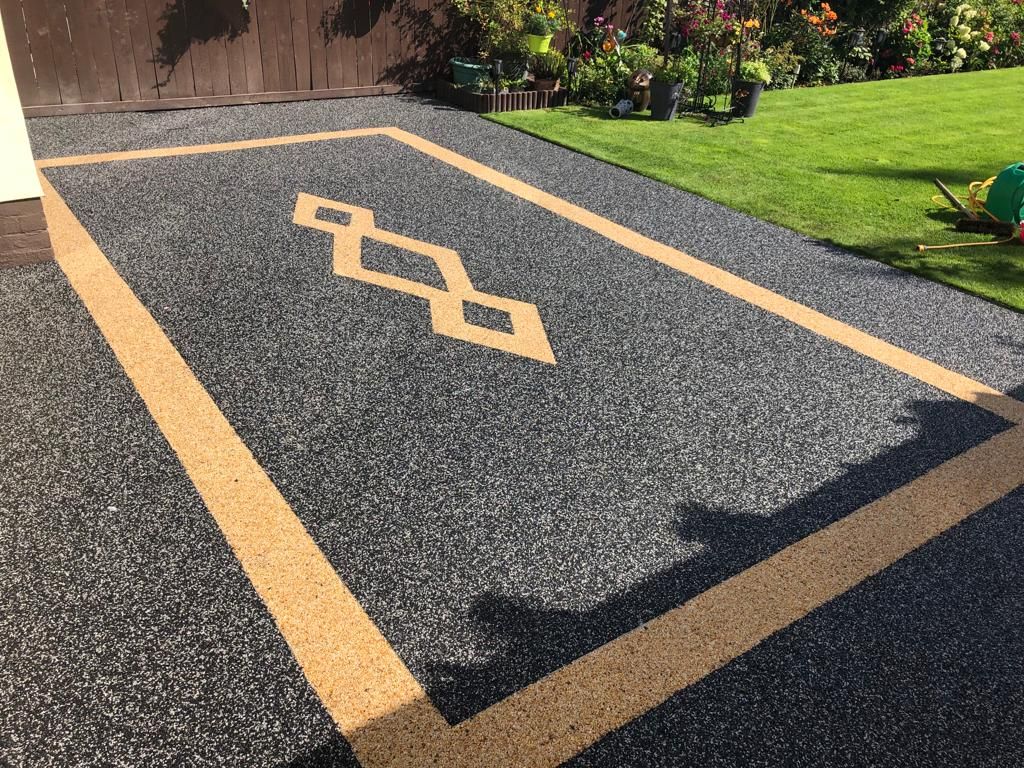
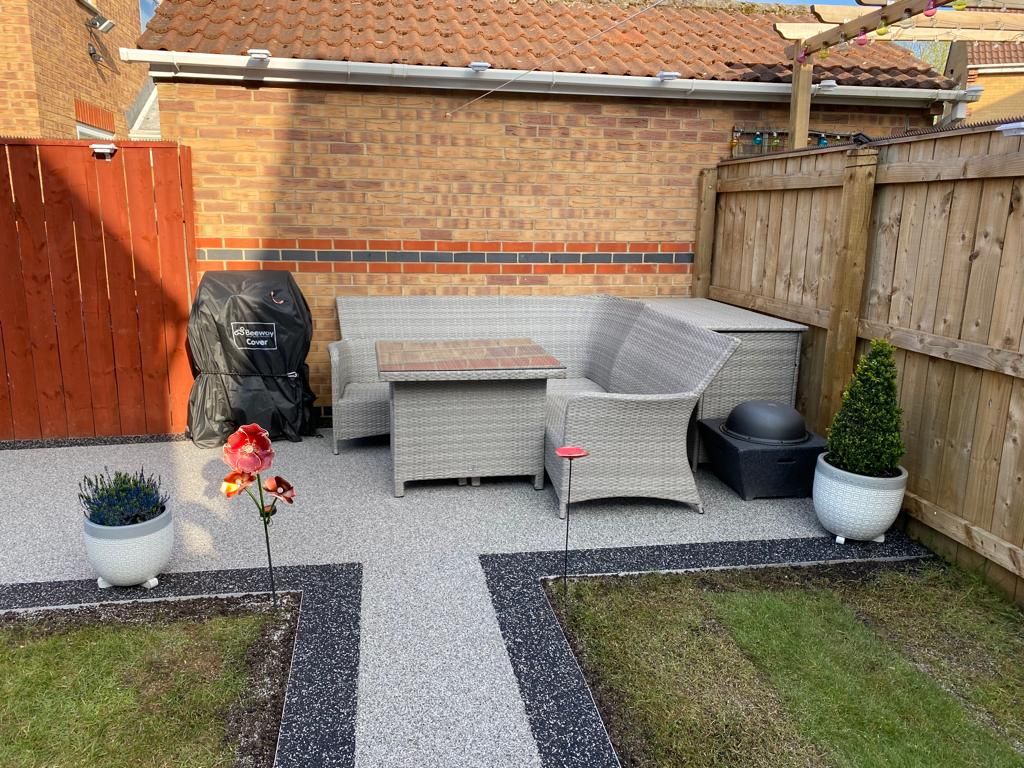
Vuba resin, hand trowelled over a solid base into one seamless permeable surface. No loose stone, nowhere for puddles to sit and nothing for weeds to come up through. Borders and inlays laid in a contrast colour if you want them.
Resin bound, pattern imprinted concrete, block paving and patios across Middlesbrough and Teesside. Every visitor, every buyer and every valuer sees it before they see anything else.
It takes a few seconds. Someone pulls up outside, and before they have reached your door they have already formed a view of the place. A cracked, weeded, patched-up drive tells them one story. A clean surface laid properly tells them a different one.
That is the whole reason this firm has the name it does. We are a Middlesbrough company, incorporated in 2017, working from industrial premises on Snowdon Road, and every job we take on is the first thing somebody sees.
Danny Wickham runs it, and he is the one who comes out to price your drive.
They behave differently, they cost differently and they suit different houses. We would rather tell you that at the quote than let you find out afterwards.
Vuba resin, hand trowelled over a solid base into one seamless permeable surface. No loose stone, nowhere for puddles to sit and nothing for weeds to come up through. Borders and inlays laid in a contrast colour if you want them.
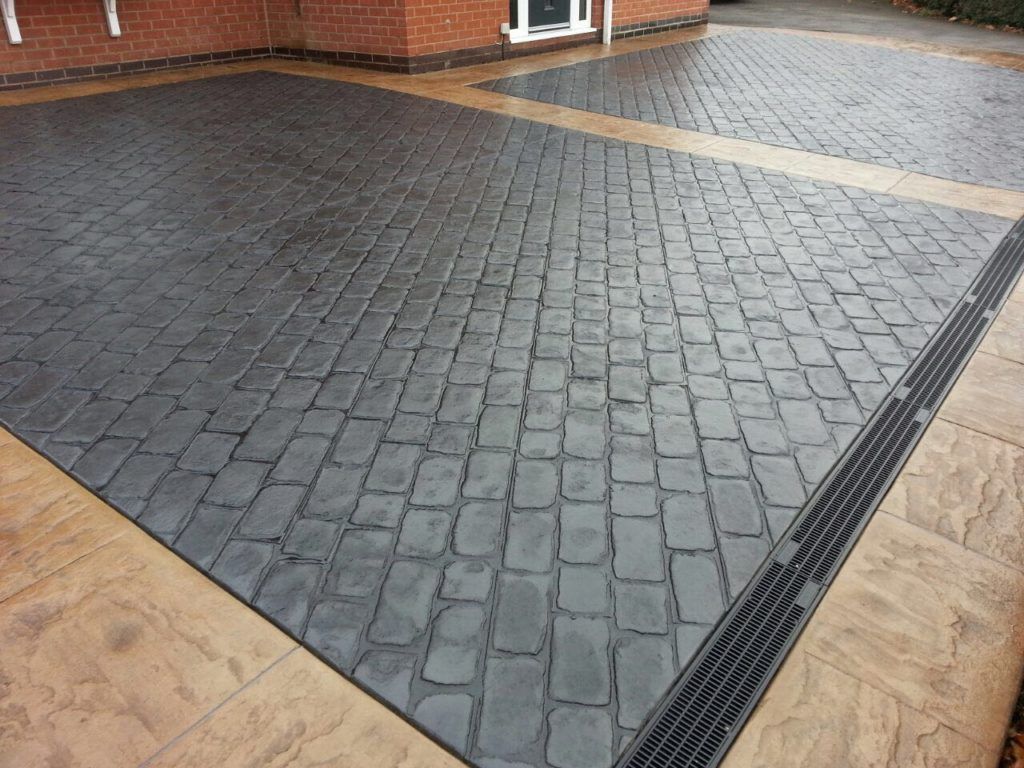
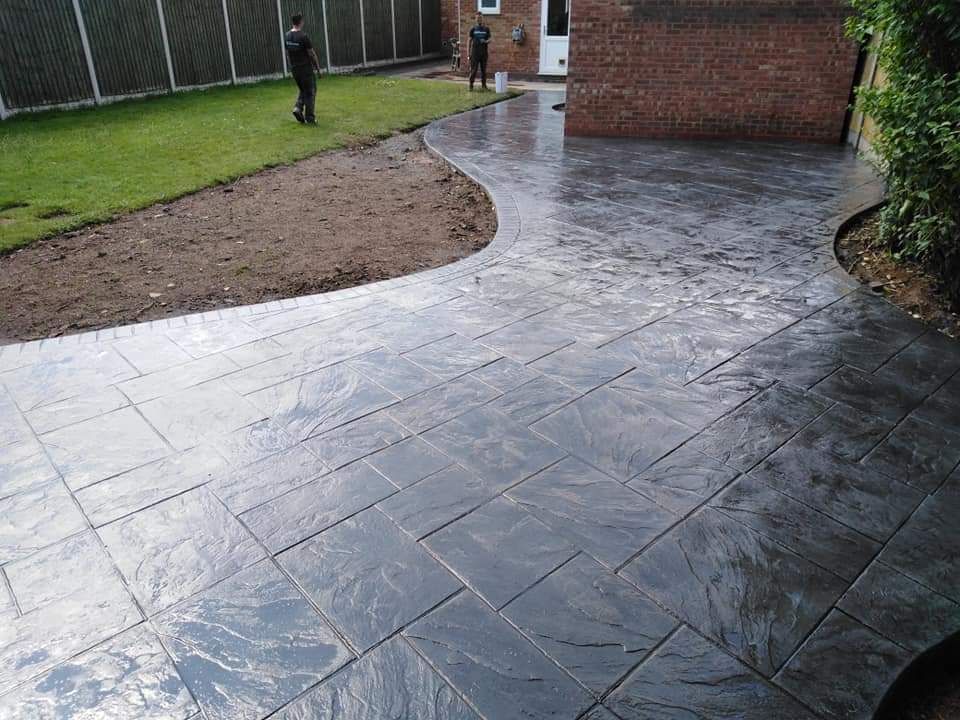
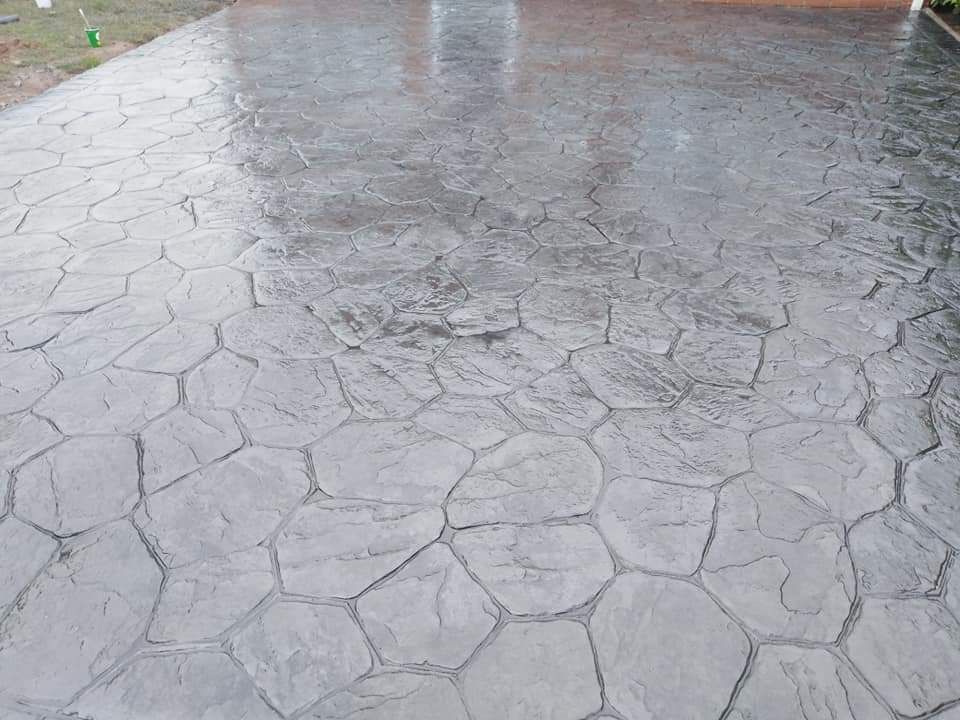
Reinforced concrete poured, imprinted with a cobble, slate or ashlar pattern and sealed. One continuous slab with no joints, so there is nothing to lift, shift or sink independently.
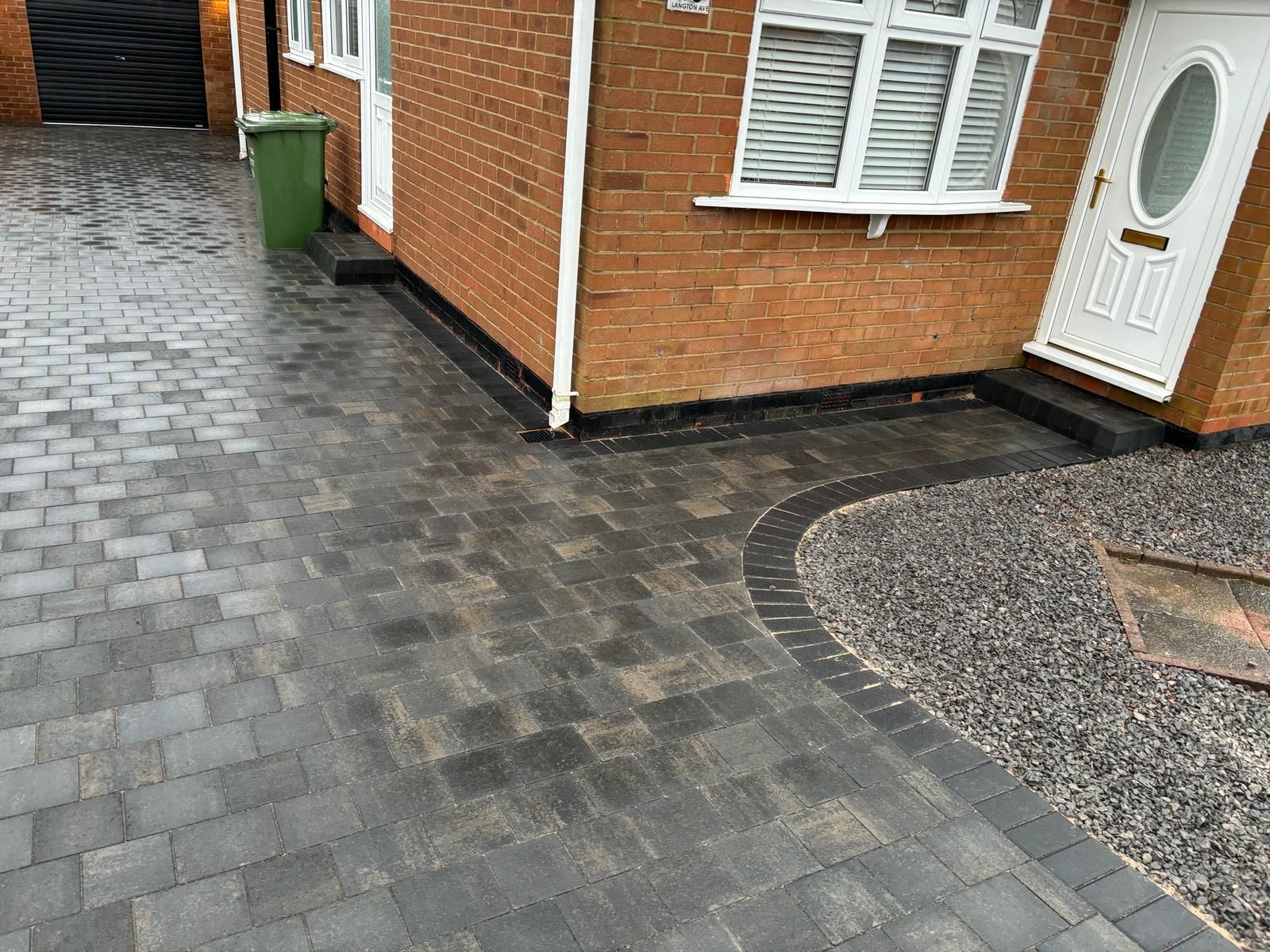
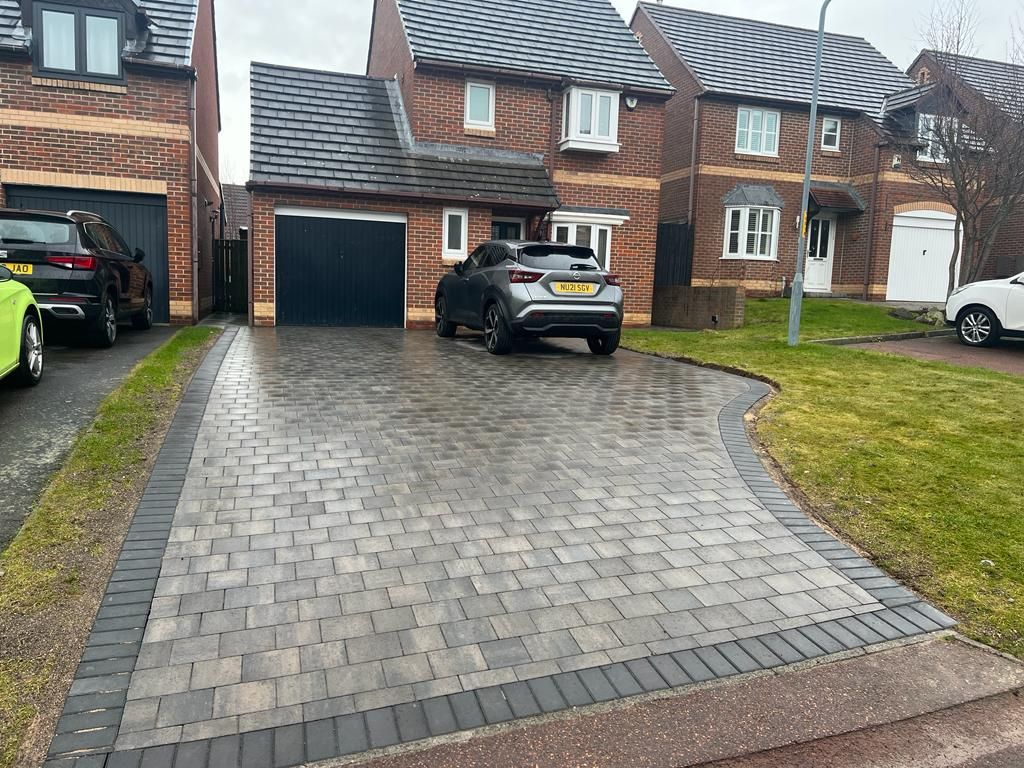
Laid to pattern with a soldier course edge and restraints haunched in concrete. The traditional choice, and the easiest to lift and relay in one spot if a service ever has to be dug up.
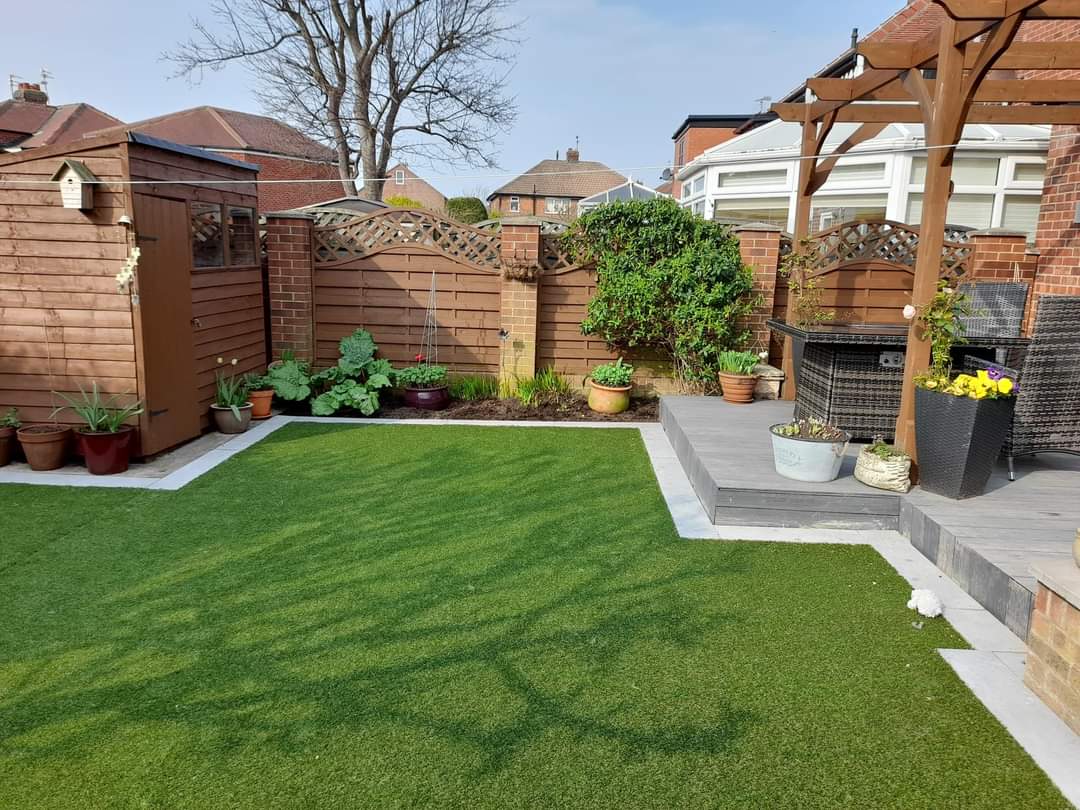
Porcelain and stone patios, steps, edging and the landscaping that goes round them. The back of the house, done to the same standard as the front.
Plenty of firms add their review counts together into one impressive-looking figure. These are ours, kept apart, so you can go and check each one yourself.
Our Google Business Profile, written by customers in Middlesbrough and across Teesside after we had finished and gone.

A separate profile with its own separate reviews, scored out of ten rather than five. Different platform, different customers, different number.
Real houses, photographed on the job. Nothing here is a catalogue picture or a stock image.
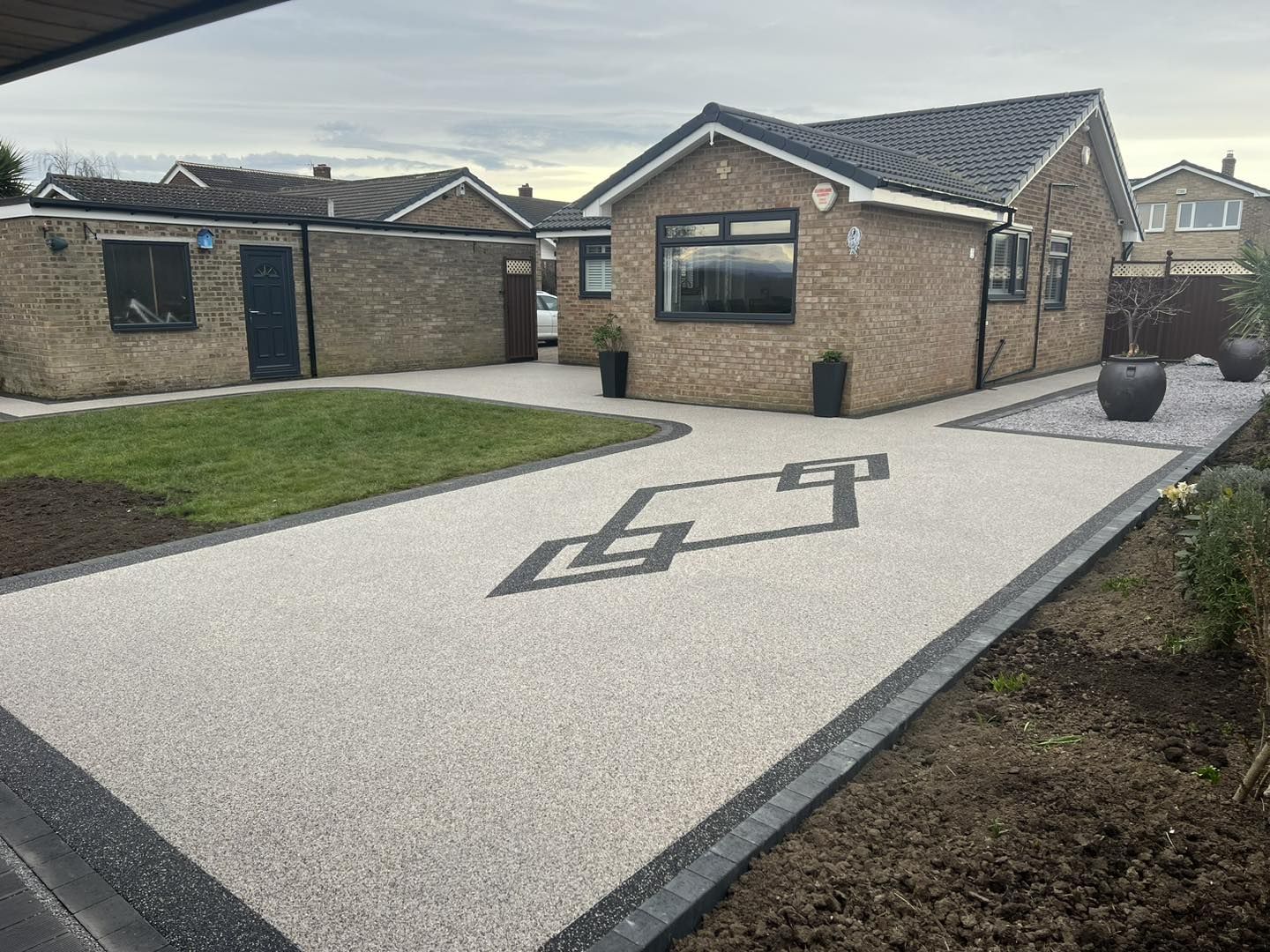
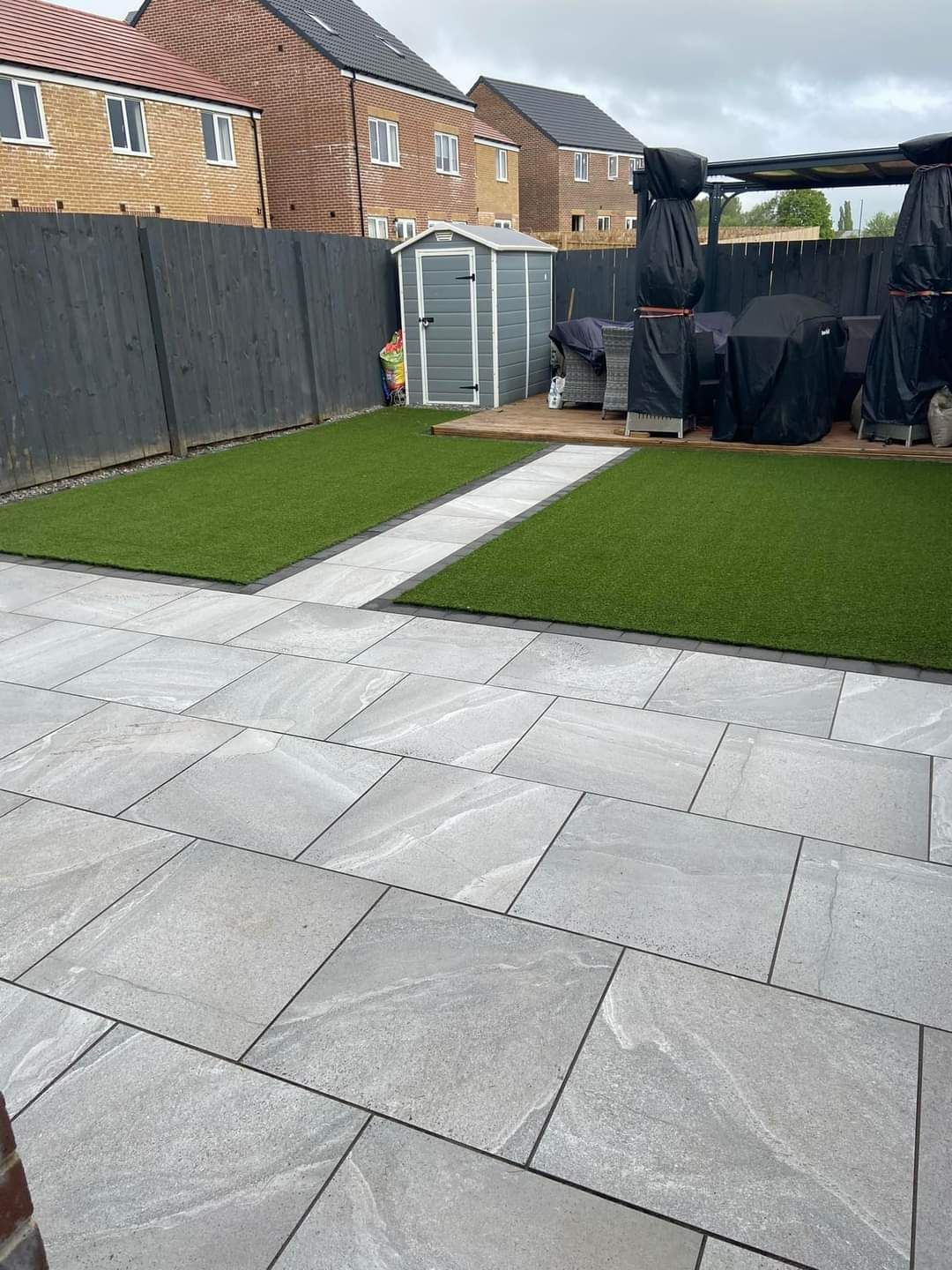
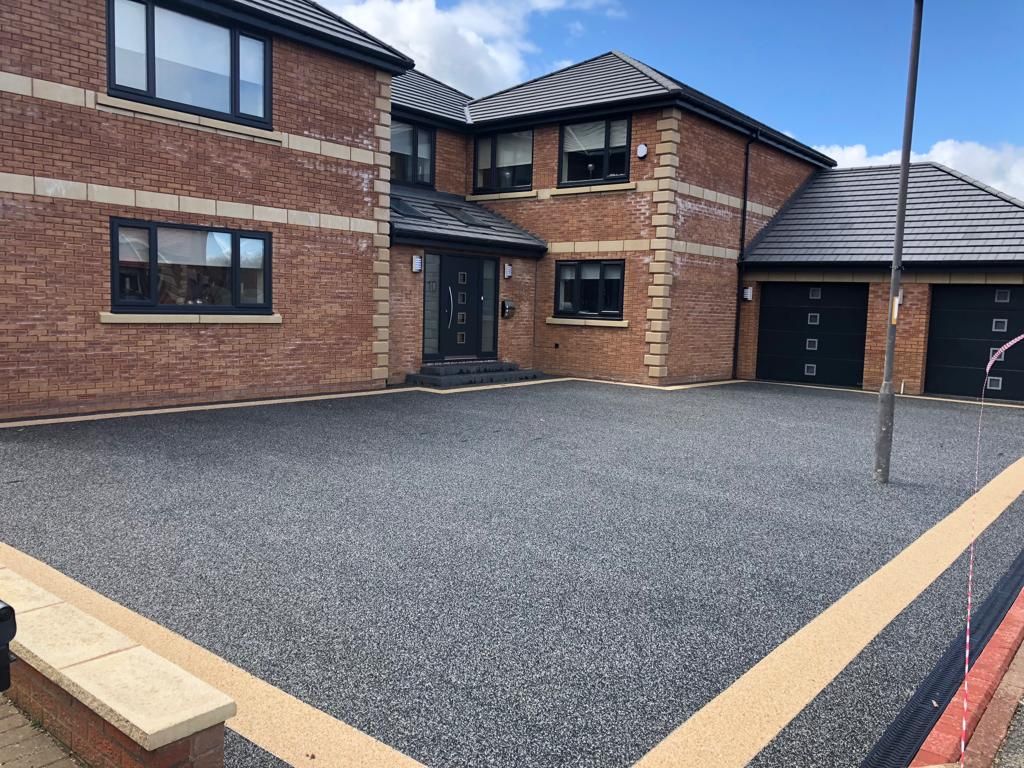
Whichever surface you pick, it is only ever as good as what is underneath it. Nearly every failed drive on Teesside failed down there, and it did not show up until the second winter.
The old surface and the soft ground under it are excavated and carted off site. Nothing is raked aside and buried under your new drive to save a skip.
Type 1 stone laid and compacted in layers rather than one thick dump. This is what actually carries the car, not the surface you chose the colour of.
Edge restraints haunched in concrete and channel drains set to falls, so surface water goes somewhere legal instead of towards your house.
Resin trowelled, concrete imprinted and sealed, or blocks laid and jointed. Then the site is swept and we walk the finished job with you.
Straight answers about how these surfaces actually behave, so you can work out which one you want before anybody quotes you.
Yes, carefully. Keep the pressure moderate, use a fan nozzle rather than a pencil jet, and hold it back from the surface rather than digging in at close range. A properly cured resin surface takes a wash well. What damages resin is a narrow high-pressure jet held right against it, which can blast the stone out of the binder.
The stone does not, because the colour is the aggregate itself rather than a coating. What can change is the binder. UV stable resins are made for exactly this reason and hold their colour, whereas cheaper non-UV binders can yellow over time on a south facing drive. Ask any installer which binder they are quoting, and get the answer in writing.
Usually not, if it drains properly. Since 2008 the rule in England is that if you are surfacing more than five square metres in front of the house with something impermeable, and the water runs off onto the road, you need permission. Use a permeable surface, or direct the water to a soakaway or a border on your own land, and it normally falls under permitted development. A dropped kerb is a separate application to the council either way.
Almost always the base, not the blocks. If the dig was too shallow, or the sub-base went in as one thick layer instead of compacted lifts, it settles under the weight of a car and takes the surface down with it. The other common cause is missing edge restraints, which lets the whole field creep sideways and open up joints.
Concrete imprint is one continuous slab, so there are no joints for weeds and nothing to shift individually, and it needs resealing every few years to keep its colour. Block paving can be lifted and relaid in a single spot if a pipe or cable ever has to be dug up, but the joints need sand topping up and the odd weed pulling. Neither is better. They fail in different ways and they suit different people.
It depends far more on the excavation and the weather than on the surface. The dig and the base are the slow part, and concrete and resin both need the right conditions to go down and cure. We will give you a realistic run of days when we quote, rather than a best case that assumes nothing goes wrong.
We are based on Snowdon Road in Middlesbrough and work throughout the surrounding towns. If you are just outside this list, ring and ask.
We will come out, measure up and price it properly, with no charge and no obligation. If a different surface would suit you better, we will say so.